What Do Jws Think About Born Again Christians
Jesus is the central effigy of Christianity, believed by Christians to be the messiah, the son of God and the 2nd person in the Trinity.
But what practice Jews believe about Jesus?
- For some Jews, the name alone is nearly synonymous with pogroms and Crusades, charges of deicide and centuries of Christian anti-Semitism.
- Other Jews, recently, take come to regard him equally a Jewish teacher. This does not mean, withal, that they believe, as Christians practise, that he was raised from the dead or was the messiah.
While many people now regard Jesus every bit the founder of Christianity, information technology is important to note that he did not intend to found a new religion, at least according to the earliest sources, and he never used the term "Christian." He was born and lived as a Jew, and his primeval followers were Jews as well. Christianity emerged as a separate religion only in the centuries after Jesus' expiry.
Who Was Jesus?
Virtually all of what is known about the historical Jesus comes from the iv New Testament Gospels — Matthew, Mark, Luke and John — which scholars believe were written several decades subsequently Jesus' death.
While there is no archaeological or other physical evidence for his existence, most scholars hold that Jesus did exist and that he was born sometime in the decade before the Common Era and crucified sometime between 26-36 CE (the years when the Roman governor, Pontius Pilate, ruled Judea).
He lived at a time when the Roman Empire ruled what is at present Israel and sectarianism was rife, with major tensions among Jews not only over how much to cooperate with the Romans merely also how to interpret Torah. It was besides, for some, a restive time when displeasure with Roman policies, also as with the Temple loftier priests, bred hopes for a messianic redeemer who would throw off the foreign occupiers and restore Jewish sovereignty in the Land of Israel.
Was Jesus the Messiah?
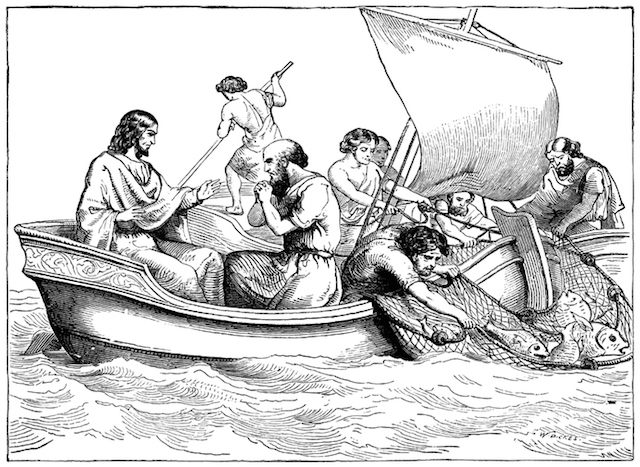
The question "was Jesus the messiah?" requires a prior question: "What is the definition of messiah?" The Prophets (Nevi'im), who wrote hundreds of years before Jesus' birth, envisioned a messianic age equally equally a period of universal peace, in which war and hunger are eradicated, and humanity accepts God's sovereignty. Past the first century, the view developed that the messianic age would witness a general resurrection of the dead, the in-gathering of all the Jews, including the 10 lost tribes, to the land of Israel, a final judgment and universal peace.
Some Jews expected the messiah to be a descendant of Rex David (based on an interpretation of God'due south promise to David in ii Samuel seven of an eternal kingdom). The Dead Body of water Scrolls speak of two messiahs: one a armed forces leader and the other a priest. Still other Jews expected the prophet Elijah, or the angel Michael, or Enoch, or any number of other figures to conductor in the messianic age.
Stories in the Gospels virtually Jesus healing the sick, raising the dead, and proclaiming the imminence of the kingdom of sky advise that his followers regarded him as appointed by God to bring about the messianic age.
More than i,000 years afterwards Jesus' crucifixion, the medieval sage Maimonides (besides known equally Rambam) laid out in his Mishneh Torah specific things Jews believe the messiah must attain in order to confirm his identity — among them restoring the kingdom of David to its former celebrity, achieving victory in battle against Israel's enemies, rebuilding the temple (which the Romans destroyed in 70 CE) and ingathering the exiles to the country of State of israel. "And if he's not successful with this, or if he is killed, it's known that he is not the one that was promised by the Torah," Maimonides wrote.
What Virtually Jews for Jesus?
Jews for Jesus is one co-operative of a wider movement called Messianic Jews. Members of this motion are not accepted as Jewish by the broader Jewish community, fifty-fifty though some adherents may accept been built-in Jewish and their ritual life includes Jewish practices. While an private Jew could have Jesus as the messiah and technically remain Jewish — rejection of any core Jewish conventionalities or practice does not negate one's Jewishness — the beliefs of messianic Jews are theologically incompatible with Judaism.
Did the Jews Kill Jesus?
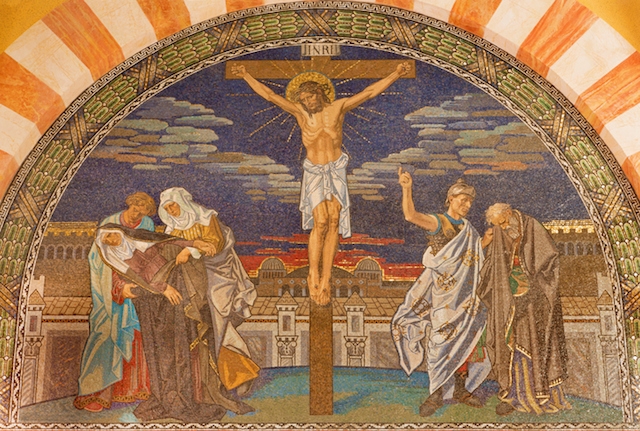
No. Jesus was executed by the Romans. Crucifixion was a Roman form of execution, not a Jewish one.
For virtually of Christian history, Jews were held responsible for the death of Jesus. This is because the New Testament tends to place the arraign specifically on the Temple leadership and more generally on Jewish people. According to the Gospels, the Roman governor Pontius Pilate was reluctant to execute Jesus just was egged on by bloodthirsty Jews — a scene famously captured in Mel Gibson's controversial 2004 picture "The Passion of the Christ." According to the Gospel of Matthew, later Pilate washes his easily and declares himself innocent of Jesus' death, "all the people" (i.e., all the Jews in Jerusalem) answer, "His blood exist on us and on our children" (Matthew 27:25).
This "blood cry" and other verses were used to justify centuries of Christian prejudice confronting Jews. In 1965, the Vatican promulgated a document chosen "Nostra Aetate" (Latin for "In Our Time") which stated that Jews in general should not exist held responsible for the death of Jesus. This text paved the style for a historic rapprochement betwixt Jews and Catholics. Several Protestant denominations beyond the earth subsequently adopted similar statements.
Why Was Jesus Killed?
Some have suggested that Jesus was a political rebel who sought the restoration of Jewish sovereignty and was executed past the Romans for sedition — an argument put forth in ii contempo works: Reza Aslan's Zealot and Shmuley Boteach's Kosher Jesus. Even so, this thesis is not widely accepted by New Attestation scholars. Had Rome regarded Jesus as the leader of a band of revolutionaries, information technology would have rounded up his followers as well. Nor is in that location whatever evidence in the New Testament to suggest that Jesus and his followers were zealots interested in an armed rebellion confronting Rome. More likely is the hypothesis that Romans viewed Jesus as a threat to the peace and killed him considering he was gaining adherents who saw him as a messianic effigy.
Did Jesus Pass up Judaism?
Some have interpreted sure verses in the Gospels as rejections of Jewish belief and practise. In the Gospel of Marker, for instance, Jesus is said to have declared forbidden foods "clean" — a verse commonly understood every bit a rejection of kosher dietary laws — just this is Mark's extrapolation and not necessarily Jesus' intention. Jesus and his primeval Jewish followers continued to follow Jewish law.
The New Attestation also include numerous verses testifying to Jesus as equal to God and as divine — a belief hard to reconcile with Judaism'south insistence on God's oneness. Notwithstanding, some Jews at the time institute the idea that the divine could take on man form compatible with their tradition. Others might take regarded Jesus as an affections, such as the "Angel of the Lord" who appears in Genesis xvi, Genesis 22, Exodus three (in the called-for bush-league) and elsewhere.
Are There Jewish Texts that Reference Jesus?
Yep. The first-century Jewish historian Josephus mentions Jesus, although the major reference in his Antiquities of the Jews appears to have been edited and augmented by Christian scribes. At that place are a few references in the Talmud to "Yeshu," which many authorities sympathize as referring to Jesus.
The Talmud tractate Sanhedrin originally recorded that Yeshu the Nazarene was hung on the eve of Passover for the criminal offence of leading Jews astray. This reference was excised from afterward versions of the Talmud, most likely because of its use past Christians equally a pretext for persecution.
In the medieval period, a piece of work chosen Toledot Yeshu presented an alternative history of Jesus that rejects cardinal Christian beliefs. The work, which is not function of the canon of rabbinic literature, is not widely known.
Maimonides, in his Mishneh Torah, describes Jesus as the failed messiah foreseen by the prophet Daniel. Rather than redeeming State of israel, Maimonides writes, Jesus caused Jews to be killed and exiled, changed the Torah and led the world to worship a simulated God.
Special thanks to Amy-Jill Levine, Academy Professor of New Testament and Jewish Studies at Vanderbilt Divinity School and College of Arts and Sciences, for her help with this commodity.
To read this commodity, "What Do Jews Believe Most Jesus?" in Castilian (leer en Español), click here.
Source: https://www.myjewishlearning.com/article/what-do-jews-believe-about-jesus/

Postar um comentário for "What Do Jws Think About Born Again Christians"